Your Lack of Movement is Literally Killing You
What if I told you that you could significantly reduce your risk of heart attacks, diabetes, depression, and even death in less than 20 minutes per day?
Would you do it?
What if it was something you already do - just not enough?
I'm not talking about an insane workout plan. I'm talking about a tiny amount of extra movement that most people have slowly deleted from their day without realizing it.
You know the kind of day I mean: you sit down at your desk, hammer through emails, drive home, eat dinner, scroll on the couch, and when you finally glance at your phone it says something like 2,347 steps. You tell yourself you'll make up for it tomorrow, because you're not lazy, you're just busy. But your joints are getting stiffer, your blood pressure is creeping up, and you're exhausted even though you barely moved.
Most people know they should move more. I don't think they realize how important it really is. When I dug into the research on daily steps and health, the outcomes for people stuck in that 2-3k step range were way worse than I expected.
So here's what I want to walk you through: how many steps you should actually aim for, why long stretches of sitting are their own quiet risk factor that almost no one talks about, and how to build your day so your step count goes up almost automatically - without turning your entire life into a step challenge.
How many steps actually matter?

Manpo = Ten thousand steps
You've probably heard you "need" 10,000 steps a day to be healthy. Fun fact: that number was made up by a Japanese company in the 60s to sell more pedometers. It isn't directly supported by research.
If you work a desk job, drive most places, and relax on the couch at night, it's very easy to land in that 2-3k range without realizing it. Your watch might buzz at you occasionally, but it feels like a gentle suggestion, not a red flag. You're not in pain, you're not in the hospital, and you might even get a workout in a few times per week. So it's easy to assume "this is just what adult life looks like."
The problem is that when researchers strap step trackers on thousands of people and follow them over time, that "normal adult life" range is exactly where the risk for early death and chronic disease is stacked the highest.
A 2025 study compared people averaging 2,000 steps a day to people averaging 7,000. The results were stark. The 7,000-step group saw significantly lower risk of depressive symptoms, falls, cancer mortality, dementia, cardiovascular disease, and all-cause mortality. They were dramatically extending the quality and length of their life by moving just a little bit more every day.
And the benefits don't stop at 7,000. A 2023 study of 227,000 participants saw benefits continuing up to 20,000 steps.
You don't need 20,000 steps to get healthier. But you do need to stop treating 2-3k as a normal baseline your body thrives on. Every additional 1,000 steps appears to reduce all-cause mortality risk by roughly 15%.
If you're feeling inspired (or horrified), here's a simple three-step protocol:
1. Find your baseline. Look at the last 3-4 weeks on your phone or watch and find your daily average.
2. Set a reasonable target.
Under 3,000? Aim for 4-5k.
Around 4-5k? Aim for 6-7k.
Already getting 7-8k or more? Keep doing what you're doing, and add more if your lifestyle allows.
3. Give yourself a week to hit that new average. You don't have to be perfect every day. Focus on doing a little more every week until you get to 7-8k. It gets easier the longer you do it.
Now that we've covered how many steps to aim for, there's another piece almost everyone misses: how those steps are spread through your day.
Why sitting all day is its own problem
Here's where most people go wrong. They sit for 8-10 hours, do a single hard workout, and assume the workout cancels out the chair.
If that sounds like you, it makes sense on paper. You check your "exercise" box, your watch gives you a green ring, and you feel like you've balanced the scales.
But your body responds very differently to 8 hours of continuous chair time than it does to those same hours broken up with tiny movement breaks.
You know when you slowly pull open an old door and it creaks loud enough to wake up the whole house? It just needs a little WD-40 and some movement to work and sound good as new. Our bodies are the same - except our WD-40 is built in. It's called synovial fluid. When you move a joint, that fluid spreads around and keeps things happy. If you're dealing with back pain, breaking up long bouts of sitting is the #1 thing I'd recommend.
Here's a simple "WD-40 protocol" you can layer onto whatever training you already do:
1. Set a 30-60 minute timer during sitting blocks. Every time it goes off, stand up and do a quick movement flow.
2. Move for 1-3 minutes. Walk to the end of the hallway and back. March in place. Take a quick lap around your house or office.
3. Attach it to things you already do. Stand and pace during calls. Walk while your coffee brews or your food microwaves. After every email batch, do a short loop.
It sounds tiny. But across a full day those breaks add up to hundreds or thousands of extra steps. More importantly, they chop up the long sedentary stretches your body hates.
How to move more without obsessing over steps
You might be thinking, "So now I'm supposed to count steps, break up sitting, lift, do cardio… is my life supposed to look like a Gatorade ad?"
This is where most people either burn out or give up. They try to micromanage every walk, every workout, and every number on their watch. Or, on the other end, they decide the whole thing is too much and go back to their old patterns.
The goal isn't to worship the number on your watch. The goal is to build a day where you accidentally end up with more steps.
When you default to pacing during calls, walking for 10 minutes after meals, using a walking pad for low-focus work, and breaking up long sitting blocks, your step count becomes a byproduct of the life you're living - not a second job you have to think about all day.
If you love cycling, running, or swimming, those are still in the mix and definitely count toward your daily activity. Just don't let one big workout be the only driver of your movement.
Here's a three-bucket system for bumping your daily movement without obsessing:
1. Default changes - movement in the background.
Put a walking pad in your office or living room and use it at a gentle pace during low-focus tasks.
Add a 10-minute walk after two meals most days.
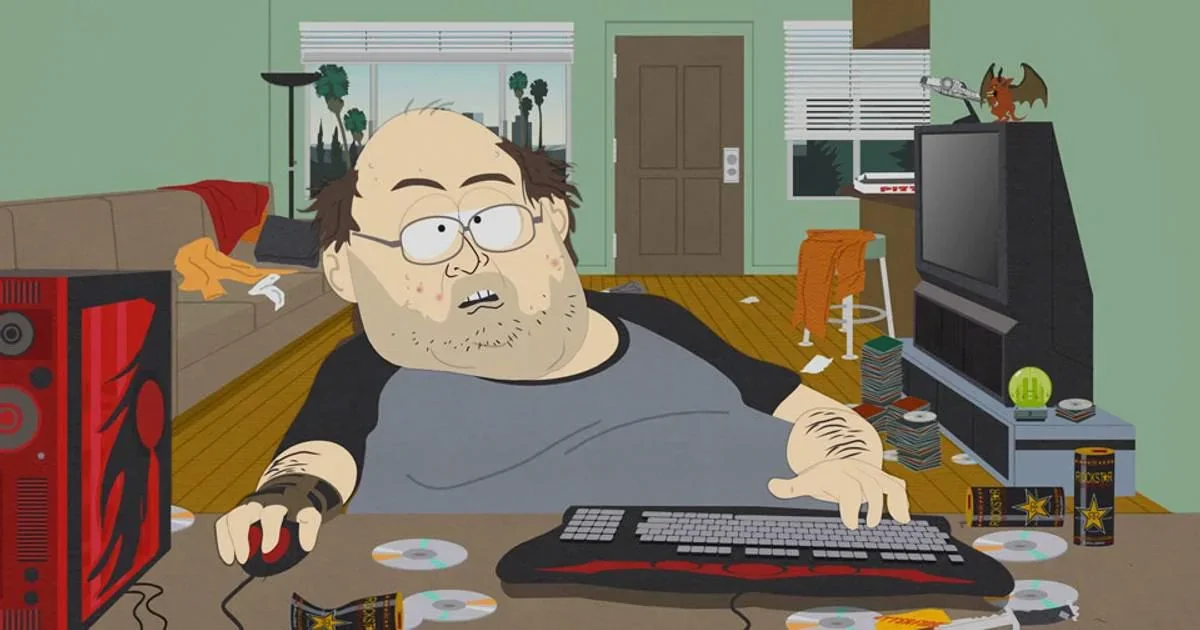
If I didn’t have a walking pad, this would be a near exact image of me
2. Exercise snacks - small, repeated bites.
One minute of walking or stairs every hour you're at a desk.
The "phone rule": if you're scrolling longer than a couple minutes, you're standing or pacing.
Personally, I'll pace, do some pushups, or run in place between queues in League of Legends or while looking for a group in World of Warcraft.
3. Lifestyle anchors - things that force movement.
Regular walks with a dog, partner, kid, or friend.
A weekly walking group or "walk and talk" catch-up. If you're trying to do a better job of staying connected with friends, calling them during a walk is a great option.
Pick one habit from each bucket and run it for a week.
When your environment is doing half the work, your step count climbs without you constantly thinking about it - and your workouts become the bonus on top, not the emergency fix.
The boring truth
Your lack of movement really is killing you slowly. Not in a jump-scare way, but in the boring, day-after-day way where your body gets stiffer, your blood pressure gets higher, and your energy fades.
But that also means this is one of the most powerful, boring levers you can pull to protect your health.
You don't have to be perfect. You don't have to rack up 20,000 or even 10,000 steps every day. You just can't keep living like a statue and expect your body to be cool with it.
Get out of the very low step range. Break up your sitting. Let your workouts be a bonus, not the band-aid.