Designing an Environment That Supports Your Goals
Most people try to improve their habits by attacking the problem head-on. More willpower. More motivation. More discipline. Ya know, the David Goggins approach.
But here’s the uncomfortable truth: even the most disciplined person in the world will struggle in an environment that constantly works against their goals.
Your surroundings influence you in ways you barely notice. What’s eye level in the fridge. Where your phone lives at night. The people you spend time with. The notifications that interrupt your focus. The gym shoes that are either buried in your closet or sitting by the door.
Your environment isn’t neutral. It’s always pulling you toward something.
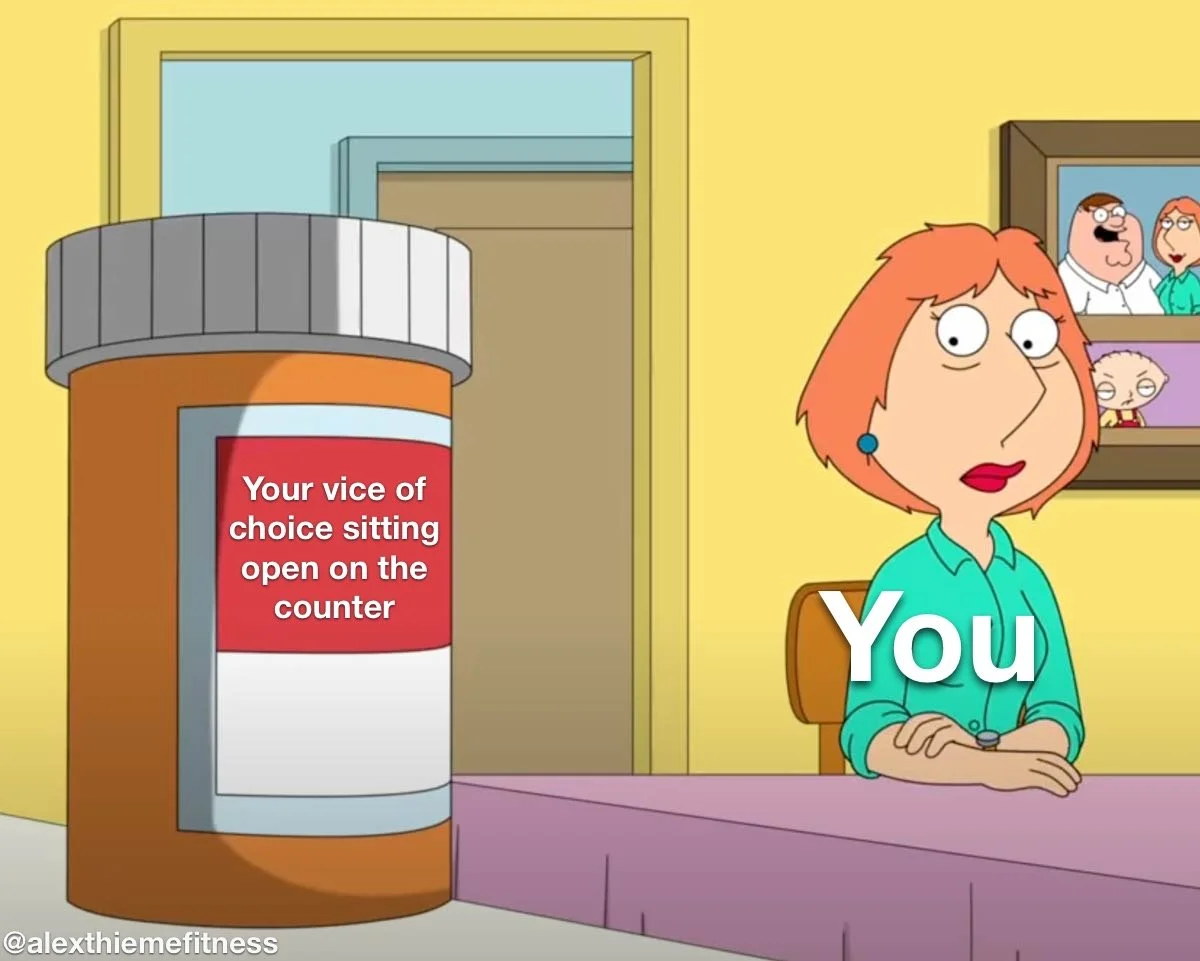
The good news is, you can shape that pull. And once you do, the habits that used to feel like a grind start to feel like a natural part of your day.
This is the heart of environment design: adjusting your spaces so the right actions become easier, and the unhelpful ones become harder.
Let’s break it down.
Why Your Environment Matters More Than You Think
If you’ve ever tried to eat healthier while your kitchen is engineered by old habits, you know how this works.
You don’t reach for the snack drawer because you “failed” or because you lack discipline. You reach for them because they’re right there. They’re easy. They’re visible. And your brain is wired to choose the path of least resistance.
Our actions are heavily influenced by what’s readily available, what cues we see, and what feels convenient. You gravitate toward whatever is frictionless. You avoid whatever requires extra effort.
This is why environment design works so well: it removes the constant inner debate. It reduces the number of decisions you need to make. And when you take decision fatigue out of the equation, consistency becomes much easier.
What Environment Design Actually Means
Environment design is the practice of shaping your surroundings to support your goals.
And it isn’t limited to the physical world. You have multiple environments influencing your habits every day:
Physical environment:
Your home, workspace, kitchen, bedroom, car, gym bag.
Digital environment:
Your phone layout, notifications, apps on your home screen, your laptop tabs, the people you follow on social media.
Social environment:
The people in your circles, what’s “normal” among them, the conversations you’re part of.
Temporal environment:
Your schedule, routines, time-of-day patterns, what happens before and after certain habits.
Every environment sends signals. Every environment either adds friction or removes it.
Once you start seeing spaces this way, you can reshape them to support the person you’re becoming.
Reduce Friction for the Actions You Want to Take
A big part of environment design is making your desired habits easier. Not a little easier. Effortlessly easier.
A few examples:
Put foods you want to eat more of where you can see them
If the first thing you see is a bowl of washed, prepped fruit or veggies, suddenly that becomes the default snack.
Move the things you want to eat to eye level.
Hide the things you want to eat less often behind them or on a lower / higher shelf. This helps force yourself to be intentional when you eat them.

Lay out your workout gear ahead of time
If your shoes, clothes, and headphones are already set out, it takes almost no thought to get started.
For morning workouts: lay them out the night before.
For evening workouts: keep your bag packed and in your car or by the door.
The fewer steps between you and your action, the more likely you’ll do it.
Use small prompts
Leave your water bottle on your desk.
Set vitamins next to your coffee maker.
Put a yoga mat in the living room instead of rolled up in the closet.
Small adjustments. Big payoff.
Add Friction to the Actions You Want to Reduce
Sometimes success comes from making an unhelpful habit slightly less convenient.
Move your phone charger out of your bedroom
If your phone isn’t within reach at night, scrolling becomes harder.
If you have to get out of bed to check notifications, you’ll think twice.
This one shift improves sleep quality, reduces screen time, and cuts late-night stress.
If you drink, keep alcohol out of sight
Instead of keeping a bottle of wine on the counter, keep it in the pantry. Instead of having beers easily accessible in the fridge, move them to the garage.
This could change your nightly beer or glass or two of wine to a more intentional choice.
Turn off non-essential notifications
Every ping pulls you away from whatever you’re doing.
Silencing social media alerts or moving certain apps off your home screen creates digital friction that protects your focus.
Small tweaks beat big overhauls
A lot of people feel pressure to redesign their entire life in one shot.
New routines. New habits. New meal plans. New systems.
But environment design works best when you start small.
A shift of one percent feels insignificant in the moment, but over weeks and months it completely changes the trajectory of your behavior.
Some of the most effective changes are so small you barely notice them until the habit starts sticking.
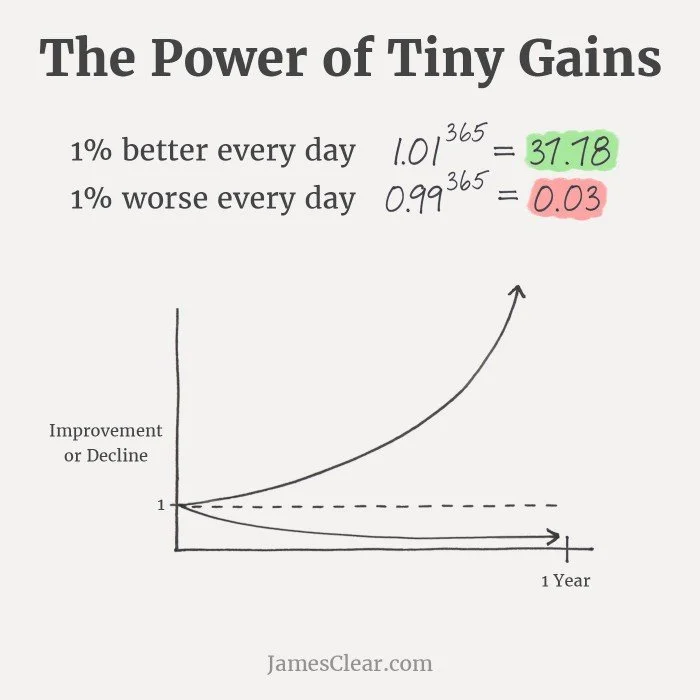
From James Clear’s book, ‘Atomic Habits’
Make Your Environment Match Your Identity
This is the deeper part of environment design: you’re not just removing friction. You’re teaching your brain something important:
This is who I am. This is what I do.
When your home, your digital spaces, and your routines reflect the future version of you, it becomes easier to step into that identity.
A kitchen stocked with foods to help you hit your protein and fiber targets.
A bedroom set up for rest.
A phone that isn’t a slot machine of distractions.
A space that makes movement a default.
Your environment becomes an ally instead of an obstacle.
Want to use your environment to better support your goals? Download my free guide on Environment Design using the form below: