The Truth Behind Saturated Fat
(And Why The New Guidelines Make No Sense)
You might’ve seen the headlines: “Government may raise the recommended limit on saturated fat.”
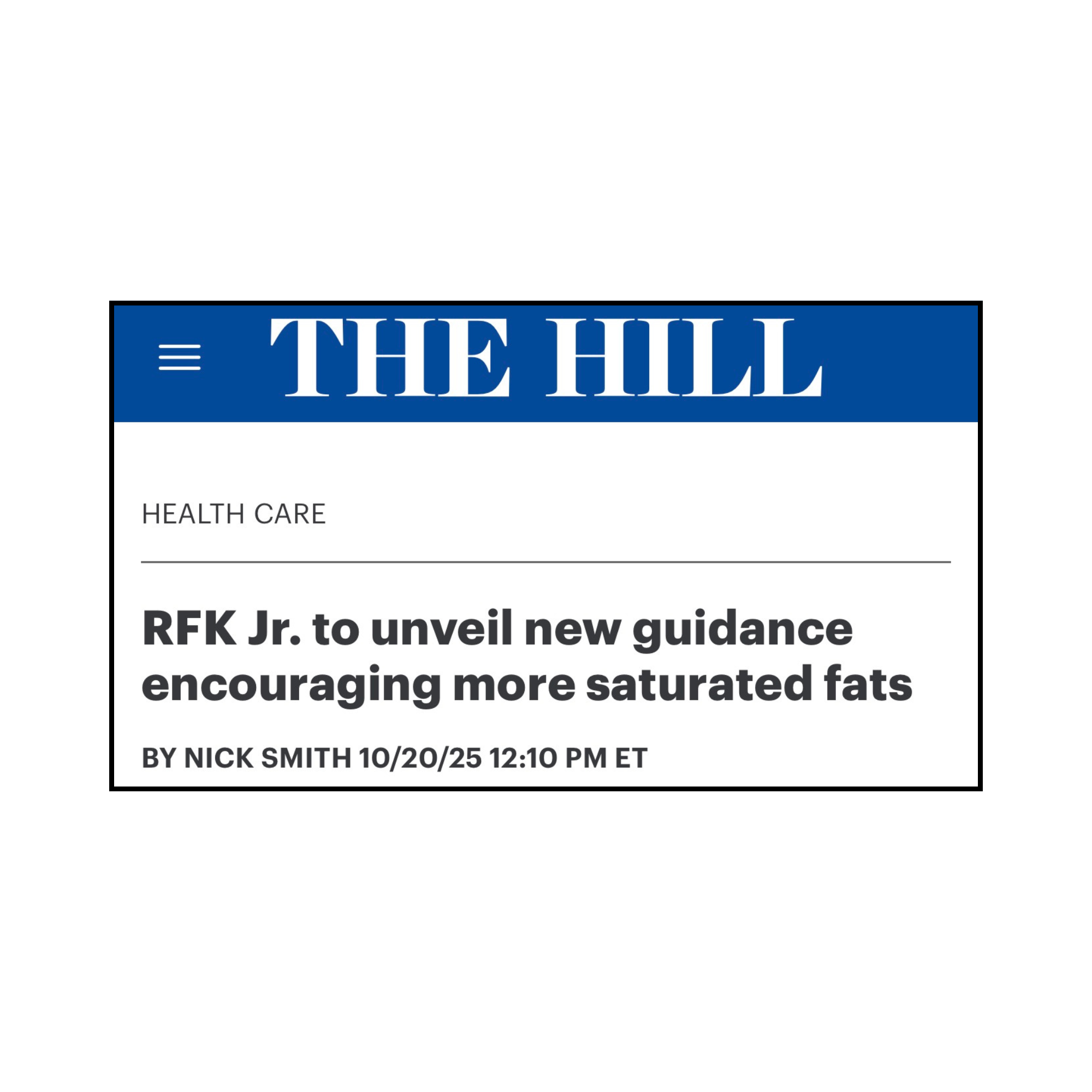
If that sounds confusing - you’re not wrong. For decades, we’ve been told to limit saturated fat because it raises cholesterol and increases the risk of heart disease. So what changed?
The short answer: not the science.
The shift seems to be driven by politics, industry pressure, and messaging - not by new evidence.
And the result will likely be more confusion, more heart disease, and less public trust in decades of solid nutrition science.
So let’s cut through the noise. Here’s what’s actually true about saturated fat, cholesterol, and heart health - in plain English.
What Is Saturated Fat, Anyway?
Before we start arguing about it, let’s be clear on what we’re talking about.
Saturated fat is a type of fat mostly found in animal products like butter, cheese, cream, and fatty cuts of meat - as well as some plant-based sources like coconut and palm oil.

The word “saturated” refers to chemistry - specifically, that the fat molecules are fully “saturated” with hydrogen atoms. That tight chemical structure makes them (typically) solid at room temperature.
If you want the practical version:
Butter? Saturated fat.
Olive oil? Mostly unsaturated fat.
That bacon grease sitting in a cup on the stove that’s now solid? Definitely saturated fat.
In general: solid at room temperature = saturated fat.
Now, here’s the key thing: saturated fats tend to raise cholesterol levels more than other fats do.
That doesn’t mean they’re poison or that you need to avoid them like the plague. It just means when you eat a lot of them in place of healthier fats, they can gradually push your cholesterol numbers in the wrong direction.
And that’s where we need to understand what cholesterol actually does.
Cholesterol: Not the Villain You Think, But Still Worth Watching

Cholesterol gets a bad reputation, but it’s not inherently bad. In fact, your body needs it - it’s a building block for hormones, part of every cell membrane, and essential for digesting fats.
You’ve probably heard of LDL and HDL when it comes to your cholesterol - often simplified into “bad” and “good.”
I don’t love that black-and-white framing, so here’s a better way to picture it:
LDL is like a delivery truck that takes cholesterol from the liver to different parts of your body - muscles, tissues, organs.
HDL is the return truck that picks up the leftovers and brings them back to the liver for recycling or disposal.
It’s kind of like ordering way too much stuff on Amazon. The LDL trucks deliver all your packages. But if the HDL recycling trucks don’t show up often enough, those boxes start piling up.
Before you know it, you can’t even walk through your living room without tripping over cardboard - or in your arteries’ case, plaque.
That’s basically what happens when LDL cholesterol is too high for too long. Plaque builds up along your artery walls, restricting blood flow and increasing your risk of heart attacks and strokes.
So yes - cholesterol is essential, but balance is everything.
“But My Grandpa Eats A TON Of Red Meat And He’s Fine!”
You’ll hear this one a lot: “My grandpa eats a pound of bacon every day and he’s 90 years old!”
But anecdotes and survivorship bias don’t overturn biology.
There’s always individual variation. Some people’s LDL barely changes when they eat more saturated fat. Others’ numbers skyrocket. Genetics plays a big role, as do lifestyle factors like exercise, body weight, and smoking.
There’s also nuance in how different foods affect cholesterol. For example, cheese and yogurt seem to raise LDL less than butter or red meat, possibly due to how calcium, protein, and fermentation interact with fat absorption.
So yes - the science is nuanced. Which is exactly why it’s so bizarre that anyone would suggest increasing the recommended intake of saturated fat.
Why This Change Makes No Sense

Here’s what we know - not from one study or one lab, but from decades of research:
When people eat more saturated fat, LDL cholesterol goes up.
When LDL cholesterol goes up, heart disease risk goes up.
That relationship has been shown across feeding trials, meta-analyses, and even drug studies. Lower LDL, lower risk. Higher LDL, higher risk. It’s not controversial in the scientific community - it’s as close to settled as nutrition science gets.
So when a new proposal comes along suggesting people eat more of the thing that raises LDL, it’s not just a minor disagreement. It’s a direct contradiction of everything we know about cardiovascular health.
If you’re thinking, “Well, maybe the new data shows something different,” - it doesn’t.
There hasn’t been a flood of groundbreaking new evidence overturning decades of work. What’s changed is the political and cultural climate, not the science.
And that’s what makes this so frustrating. It undermines the credibility of nutrition science and gives ammunition to every influencer who claims “experts are lying to you.”
The Actual Expert Consensus
The American Heart Association (AHA) has been studying heart health longer than any of us have been alive. Their current recommendation is simple:
Keep saturated fat below 6% of your total daily calories.
If you eat around 2,000 calories per day, that’s about 13 grams of saturated fat. For context, one Baconator from Wendy’s has about 26 grams. So that single sandwich doubles your recommended daily intake - and that’s before you’ve even touched the fries (or eaten anything else that day).
That doesn’t mean you can never have a Baconator. It just means if that kind of meal is an everyday occurrence, your arteries are probably not thrilled.
The AHA’s stance isn’t fear-mongering. It’s based on controlled trials, decades of epidemiological data, and mechanistic understanding of how fats affect lipoproteins. And while there’s room for personal flexibility, the general takeaway hasn’t changed:
Less saturated fat, less plaque buildup, lower heart disease risk.
What You Should Actually Focus On
Look - I’m not here to ruin your fun or tell you to throw out your butter.
But if your daily meals look like a fast-food commercial, don’t be shocked if your bloodwork doesn’t come back glowing.
The good news? Eating for heart health isn’t rocket science, and it doesn’t mean eating bland food.
Here’s what actually matters:
Prioritize whole foods, especially plants. Fruits, vegetables, beans, lentils - they’re rich in fiber, which helps lower LDL.
Don’t fear fat. Just shift the balance. Use olive or avocado oil (for example) instead of butter when cooking. Add nuts, seeds, and fatty fish like salmon or sardines a few times per week (high in healthier fats).
Enjoy red meat in moderation. You don’t have to cut it out entirely - just vary your protein sources and opt for leaner cuts sometimes.
Fast food isn’t banned. Just don’t make it a daily staple. A little balance goes a long way.
Get your cholesterol checked regularly. Especially LDL and ApoB if your doctor offers it - ApoB is a stronger indicator of cardiovascular risk than LDL alone.
Most importantly, remember that your health isn’t made or lost by one nutrient or one meal. It’s built through consistent, boring, everyday choices that add up over time.
The Bottom Line

The debate over saturated fat isn’t about demonizing a single nutrient - it’s about understanding risk.
Yes, you can find outliers who eat butter by the stick and live to 95. You can also find people who smoke every day and never get lung cancer. But those exceptions don’t disprove the rule; they just remind us that biology has a lot of wiggle room.
The broader pattern is clear: higher LDL means higher cardiovascular risk. And saturated fat raises LDL.
So until someone presents actual, large-scale evidence showing otherwise, the advice stands:
Keep saturated fat on the lower side, swap in more unsaturated fats, and build a diet based on foods that love you back.
And if anyone tells you the government wants you to eat more saturated fat - maybe take that with a grain of salt (and a drizzle of olive oil instead of butter).